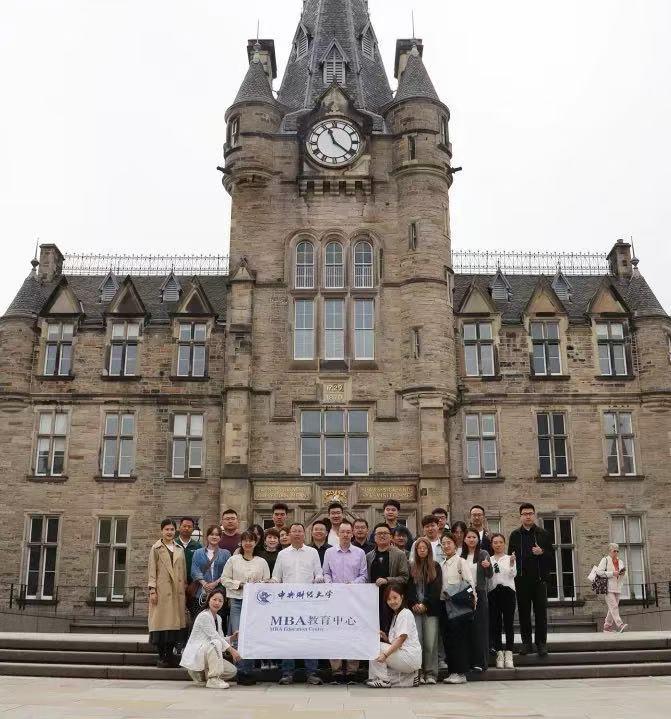
To thoroughly implement the spirit of the Third Plenary Session of the 20th CPC Central Committee and the National Education Conference, actively advance the internationalization strategy of MBA education at Central University of Finance and Economics (CUFE), and fulfill the mission of CUFE Business School to "contribute new management knowledge and cultivate leaders with a global perspective, innovative spirit, and sense of social responsibility", from August 10 to 23, 2025, the CUFE GEMBA project team, led by four teachers - Liu Xiaoyuan, Vice Dean of CUFE Business School, Yao Xiao, Associate Professor of the Strategy Department, Zhou Yan, Director of the MBA Admission and Promotion Department, and Zeng Gongxing, Counselor of the MBA Student Affairs Department - organized 28 CUFE MBA students to embark on a themed study visit centered on "Fintech Leadership and Innovation Strategy in the AI Era". Through a three-dimensional integration of course learning, corporate visits, and cultural experiences, a high-intensity immersive learning scenario was created for the students, helping them deepen their understanding of international business rules, and enhance their cross-cultural collaboration capabilities and global strategic thinking.
Chapter 1: The University of Edinburgh - Laying an Academic Foundation to Decode the Integration of AI and Finance
As the core academic venue for this study visit, the University of Edinburgh Business School, with its "theory + practice" dual-drive model, tailor-made a curriculum system for CUFE students that accurately meets the needs of the AI era. This century-old institution, holding the triple international accreditations of AMBA, AACSB, and EQUIS, has opened up a new dimension of fintech cognition for the students from a cutting-edge academic perspective. During the study visit, the project team orderly offered 9 professional courses, 4 corporate visits, and multiple cultural exchange activities around the core theme of "AI + Finance", successfully building a closed-loop growth path of "theoretical learning - practical verification - cognitive upgrading".
In-depth Classroom Learning: Breaking the Barrier between Academia and Practice from Technical Principles to Strategic Implementation
On the first day of the study visit, Professor Gavin Jack, Dean of the University of Edinburgh Business School, started with a vivid narrative of the city's history, systematically reviewed the school-running philosophy of the University of Edinburgh and the development context of the business school, and extended a warm welcome to the teachers and students of the CUFE GEMBA project team. Subsequently, Dr. Khaladdin Rzayev, Co-Director of the Edinburgh Centre for Financial Innovation (ECFI) and Senior Lecturer in Finance at the Business School, delivered the first core course - "A Comprehensive Overview of Financial Innovation and Artificial Intelligence". Starting from the academic definition and development history of fintech, and combining the technical principles and architecture of machine learning and artificial intelligence, the course used practical cases such as "the application of AI in credit decision-making" and "the optimization of high-frequency trading algorithms" to build an integrated cognitive framework of "technology - industry - finance" for the students.

In the subsequent courses, the "professor team" of the University of Edinburgh Business School each demonstrated their expertise: Dr. Adam Ntakaris focused on the theme of "Generative AI and Large Language Models", and specially invited senior engineers from Huawei to give cross-boundary sharing, in-depth analyzing the implementation path of AI technology in corporate customer service and risk prevention and control, effectively breaking the barrier between academic theory and industrial practice; Professor Raluca Bunduchi, with "Strategic Leadership in the AI Era" as the core, innovatively launched a workshop on "Organizational AI Readiness Assessment", guiding students to design preliminary digital transformation plans based on the actual scenarios of their own enterprises, realizing the transformation of theoretical knowledge into practical solutions.
Among them, the course "Data Strategy and Ethical Supervision" was particularly thought-provoking. By comparing the AI supervision frameworks of China, the UK, and the EU, the professor explained layer by layer from "algorithmic fairness" to "data privacy protection", and from "risk prevention and control of financial AI" to "ethical review mechanisms". This made the students deeply realize that true fintech leadership not only requires proficiency in technology and good strategic planning, but also the adherence to bottom lines and the assumption of responsibilities.

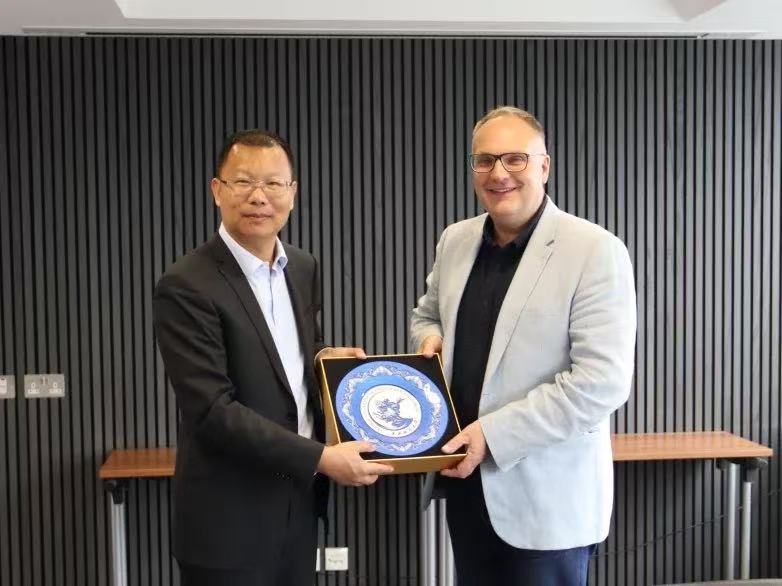
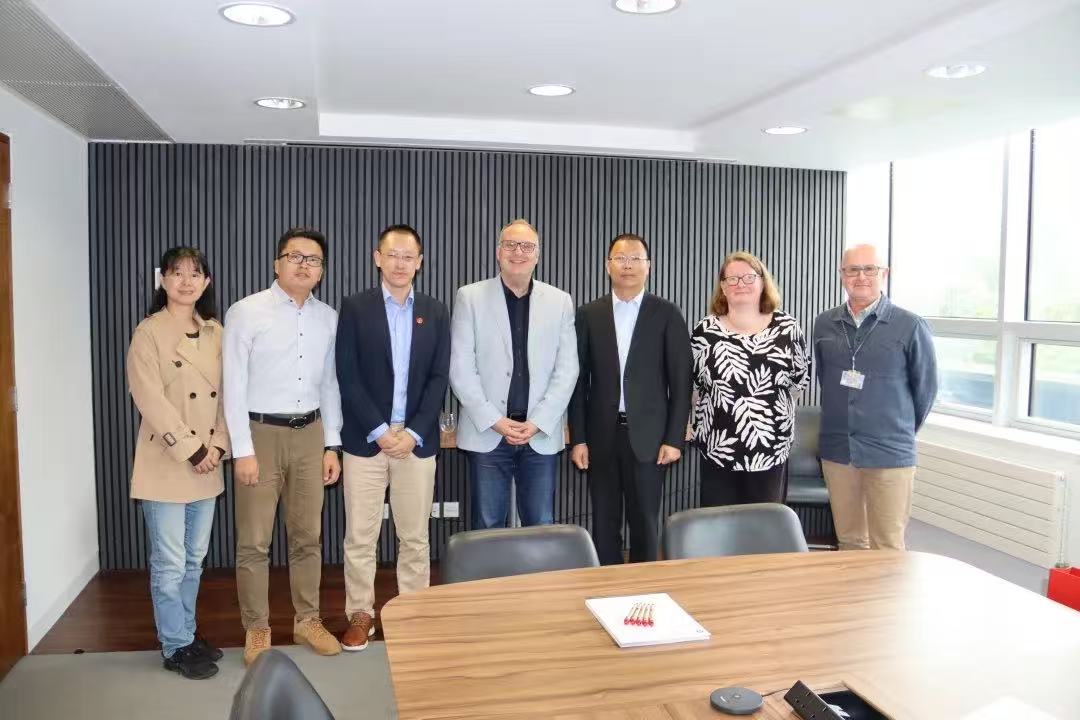
During the study visit, Vice Dean Liu Xiaoyuan also led the team to hold a friendly discussion with Professor Gavin Jack, Dean of the University of Edinburgh Business School, and the course team on future cooperation. They conducted in-depth exchanges on key issues such as the establishment of dual-degree programs, joint postgraduate training, MBA student exchange visits, student exchanges, and scientific research cooperation at the undergraduate, master's, and doctoral levels, laying a solid foundation for deepening cooperation between the two universities.
Corporate Visits: Verifying Knowledge in Practice and Gaining Insights from Cases
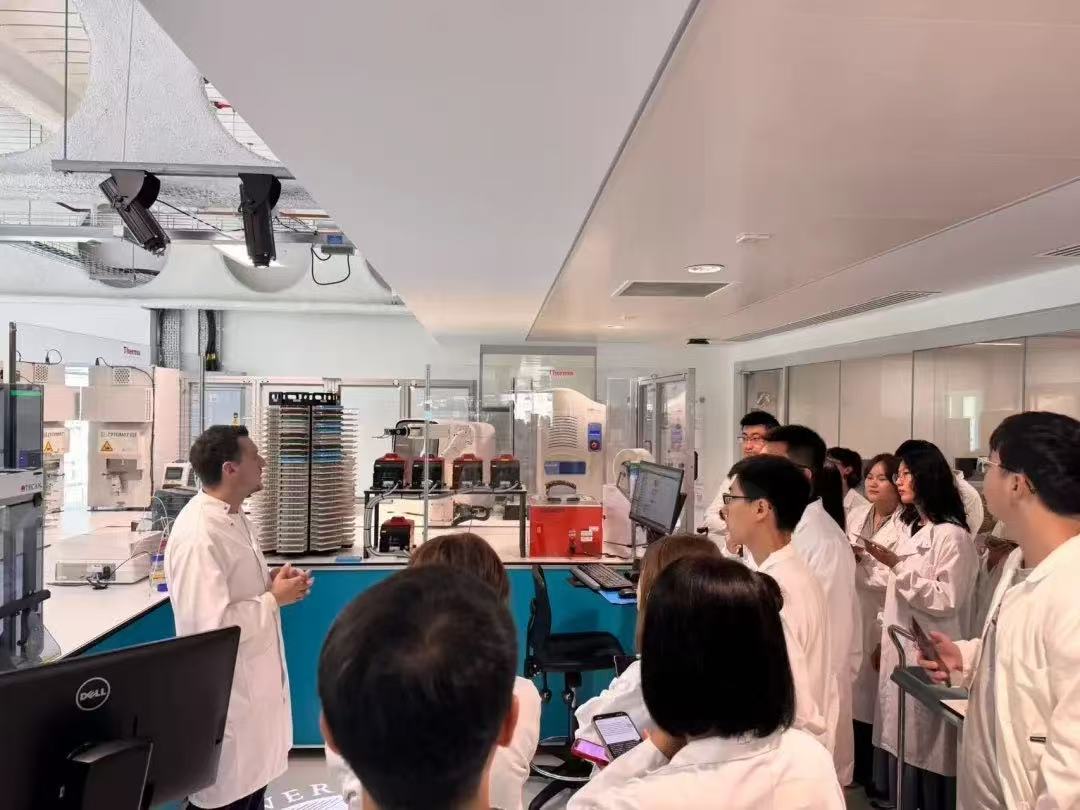
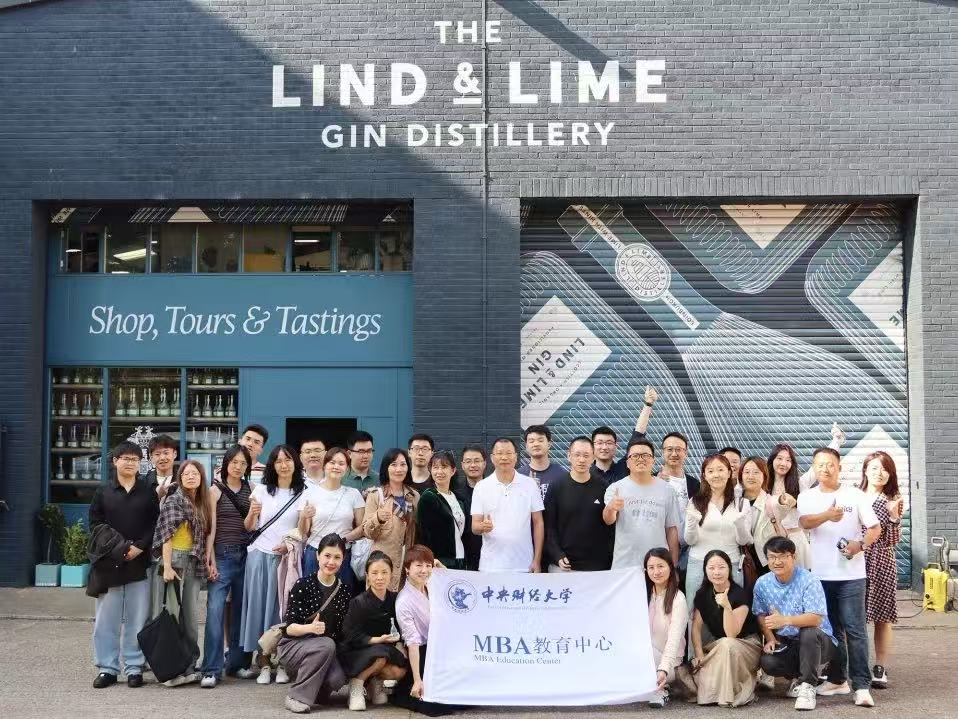
To promote the transformation of classroom knowledge into practical applications, the University of Edinburgh Business School carefully selected 4 representative enterprises covering diverse fields such as finance, biotechnology, and traditional manufacturing, and organized on-site visits. At the Edinburgh Genome Foundry, the students witnessed how AI optimizes the entire process of genetic engineering experiments - from sample data analysis to experimental program generation. The efficiency and accuracy of AI technology perfectly echoed the theoretical explanation of "cross-domain AI applications" in the classroom; at the Lind & Lime Distillery, while tasting the mellow flavor of Scottish whisky, the students had in-depth discussions with the enterprise management on "the digital overseas development strategy of traditional brands". From social media marketing to global supply chain management, they truly realized that "innovation strategy" is not an abstract concept, but a practical and implementable business plan.

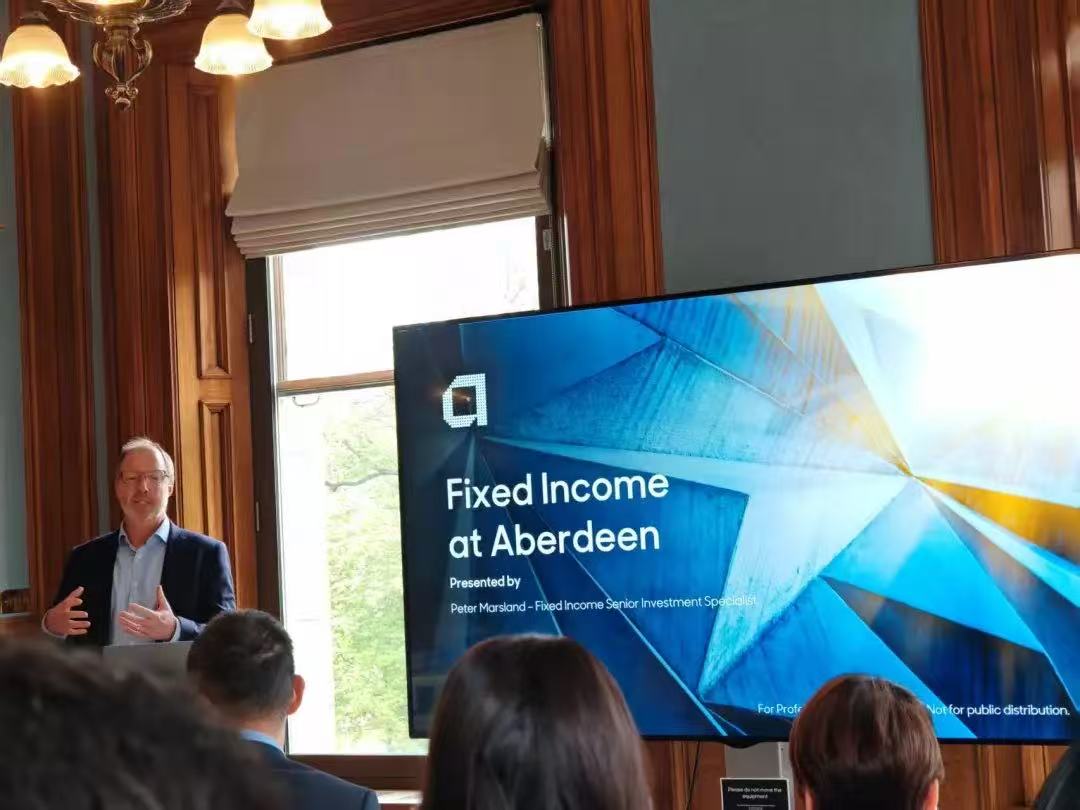
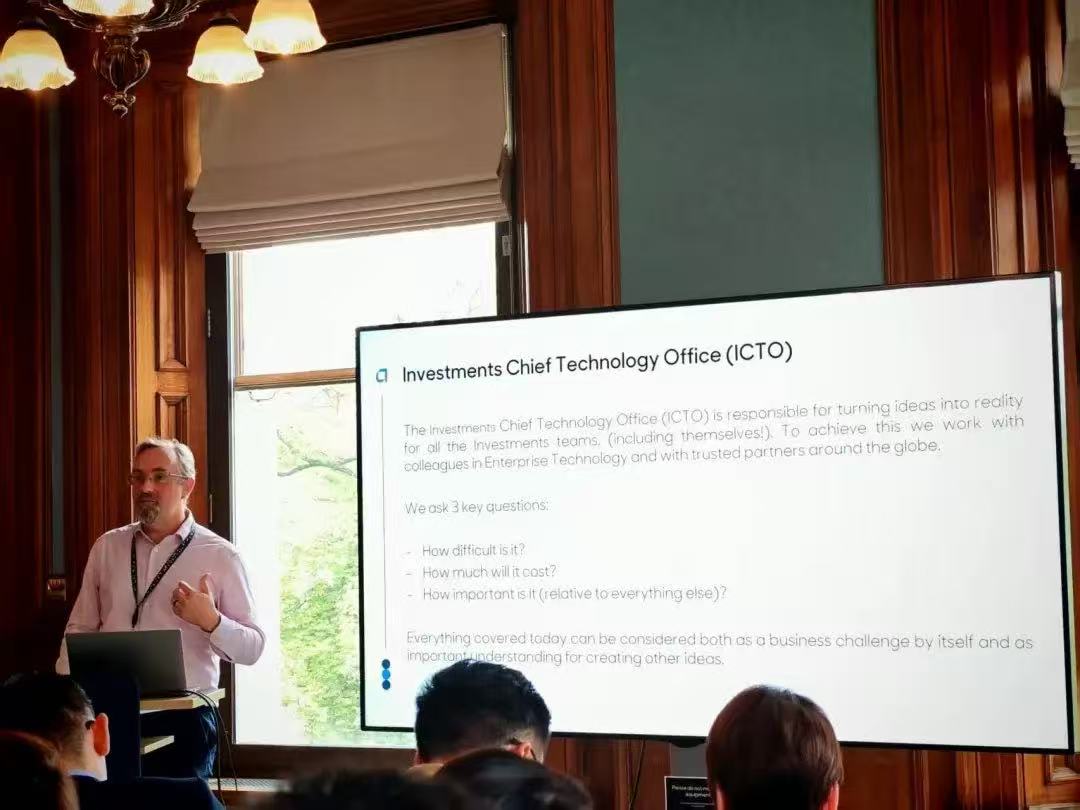
The visit to Aberdeen, a world-renowned asset management company, directly focused on the core of the financial field. The company's management shared contents such as "AI-driven investment decision-making systems" and "digital risk control models" based on the theme. This not only accurately answered the students' questions about "how AI reshapes financial services", but also provided a highly valuable international reference for the digital transformation of Chinese financial institutions.


Cultural Immersion: Nurturing Thinking in History and Nature and Experiencing the Charm of British Civilization
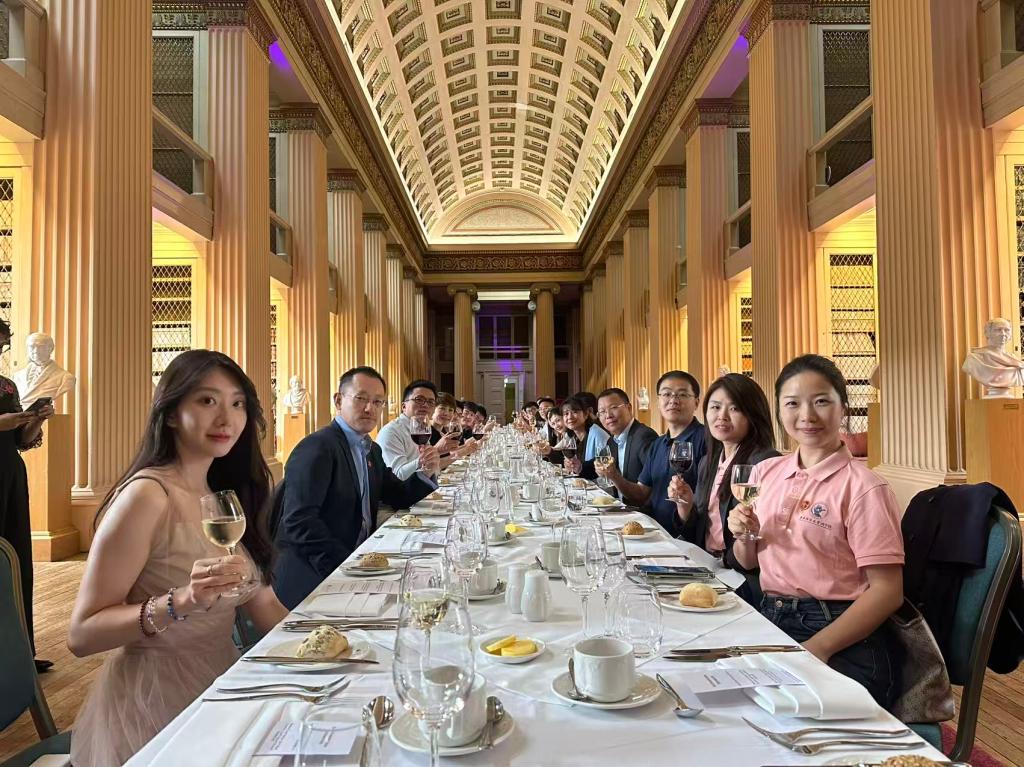
In addition to academic learning, the University of Edinburgh Business School arranged rich cultural experiences to inject a strong humanistic atmosphere into this study visit. The reception team specially arranged for the students to visit the Old College of the University of Edinburgh, and held a meaningful farewell dinner for the project team in the library of this ancient college. Wandering among the classical buildings built in the 18th century, they personally felt the profound historical heritage of this top university; on the stone-paved roads of the "Royal Mile" ancient street, the students followed the guide to listen to the rise and fall of the Kingdom of Scotland, and understood the unique temperament of this city where "the ancient and the modern coexist" from the vicissitudes of Edinburgh Castle.
At the welcome dinner held at St Leonard's College, the students learned Scottish traditional dances to the rhythm of the musicians, experiencing Scottish folk customs in an immersive way; in the Scottish traditional musical instrument - bagpipe experience session, under the patient guidance of the bagpiper, the teachers and students tried to hold the bagpipe tube and feel the coordination between breath and melody. Although their first attempt was a bit awkward, they truly touched the soul of Scottish culture through the interaction.


Chapter 2: London - Expanding Practical Horizons to Touch the Pulse of Global Finance
From August 15 to 17, the project team left Edinburgh temporarily and went to London, a global financial center, to start a practical study visit. By entering well-known financial institutions, having dialogues with top academic experts, and visiting cultural landmarks, the students gained a close understanding of the operation logic of the international financial market and further deepened their cognition of "global financial ecology and AI technology application".
Financial Dialogues: Gaining Insights into International Operation Practices from the London Branch of Agricultural Bank of China to the City of London
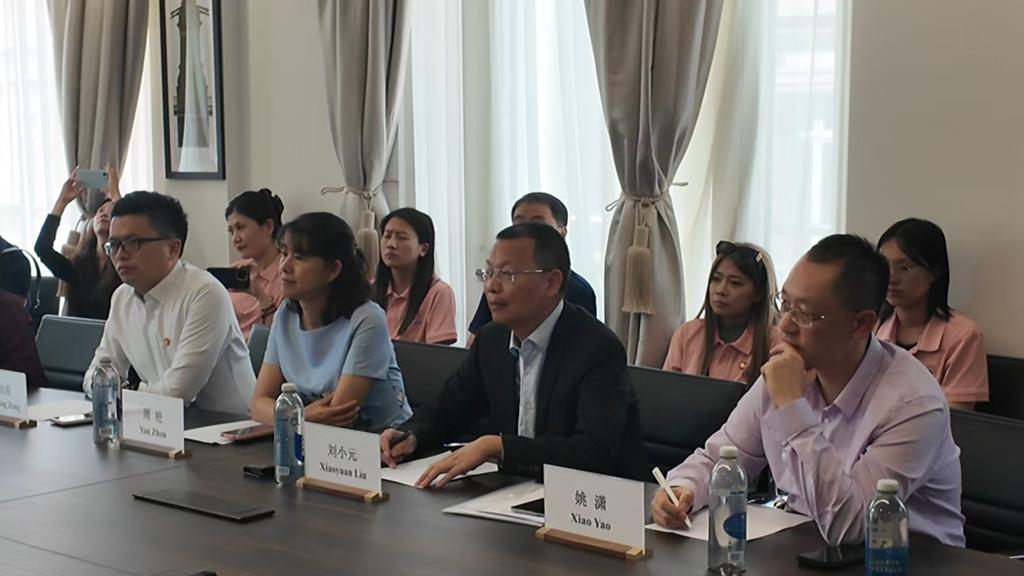
The London Branch of Agricultural Bank of China was the core visiting unit of this London study visit. Fang Min, General Manager of the Branch, together with the management team including Gu Guo, Deputy General Manager, Adrian Burbanks, and Director Jia Wei, warmly received the team. They systematically shared the practical experience of Chinese-funded commercial banks in international operation from the perspectives of "the branch's ten-year layout in the European market", "cross-border financial product innovation", and "risk response strategies after Brexit".
In the interactive session, the students actively asked questions on key issues such as "how Chinese-funded institutions achieve differentiated competition with international investment banks", "the impact of digital currency on traditional banking business and response strategies", and "the construction of international talent competence models". The management team gave detailed answers one by one combined with specific business cases, enabling the students to clearly grasp the core principle that "global operation needs to take into account compliance, localization, and innovation".
After leaving the London Branch of Agricultural Bank of China, the students wandered along London's Financial Street. The row upon row of international financial institution buildings became the most vivid "practical teaching materials" - the architectural styles of JPMorgan Chase and Barclays Bank contain the changes of financial history, and the air is filled with the atmosphere of global capital competition. While observing and thinking, the students exchanged views on "the transformation direction of financial institutions in the AI era", allowing the theoretical knowledge learned in the classroom to be verified and deepened in real scenarios.



Academic Exchanges: Cutting-edge Technology in UCL Lectures Stimulating Cross-domain Thinking
At University College London (UCL), a themed lecture on "Machine Learning and Financial Applications" sparked the students' thinking. Professor Ye Zhen, PhD Supervisor at UCL and Research Fellow of the Institute for Infrastructure and Environment, and Associate Professor Melvyn Weeks from the University of Cambridge, used vivid cases such as "the application of algorithms in high-frequency trading" and "the practice of evolutionary algorithms in risk prediction" to explain in simple terms how AI technology reconstructs the operation logic of the financial market.
In the interactive discussion session, the students had a heated discussion on cutting-edge issues such as "the definition of the ethical boundary of algorithms" and "the challenges faced by fintech supervision". The collision and integration of viewpoints from different professional backgrounds enabled each student to gain cross-domain inspiration and thinking.



Civilization Tour: Strengthening the Sense of Mission and Responsibility through Contemplation on History from the British Museum to Urban Landmarks
If Financial Street and academic lecture halls are classrooms for "professional practice", then the British Museum and London's urban landmarks are halls for "humanistic perspective" and "spiritual baptism". When the students entered the China Exhibition Hall of the British Museum, their eyes fell on those cultural relics that had been lost overseas due to historical disasters - from the bronze ritual vessels engraved with Shang and Zhou Dynasty patterns, to the silk paintings of Song and Yuan Dynasty landscapes, from the porcelain and jade carvings embodying Ming and Qing Dynasty craftsmanship, to the silk fabrics recording cultural exchanges. Every cultural relic in the exhibition hall seemed to silently tell the humiliating past of modern China, which was poor and weak and suffered the loss of cultural relics. Standing in front of the cultural relics, the students' mood was particularly heavy. In the past, China was passively bullied due to backward science and technology and weak economy; today, we must uphold the belief that "our generation should strive for self-improvement" and the ambition of "serving the country through finance and economics", strive to catch up in fields such as fintech and high-end manufacturing, and protect the achievements of civilization with strength, so that the national culture can truly stand tall.
In addition, the melodious chimes of Big Ben, the royal guard changing ceremony at Buckingham Palace, and the mechanical aesthetics of Tower Bridge allowed the students to personally experience London's urban temperament of "the integration of tradition and modernity". During their walk along the River Thames, the students felt a greater sense of gravity when sharing their thoughts: "A truly international talent must not only accurately grasp trends in the financial market and find common ground amid cultural differences, but also always remember their roots, safeguard national dignity with a spirit of self-improvement, and promote national development with practical efforts."


Chapter 3: Epilogue - Sailing towards the Future with Knowledge as the Sail
Group Presentations: Pooling Wisdom and Strength to Deliver Practical Achievements
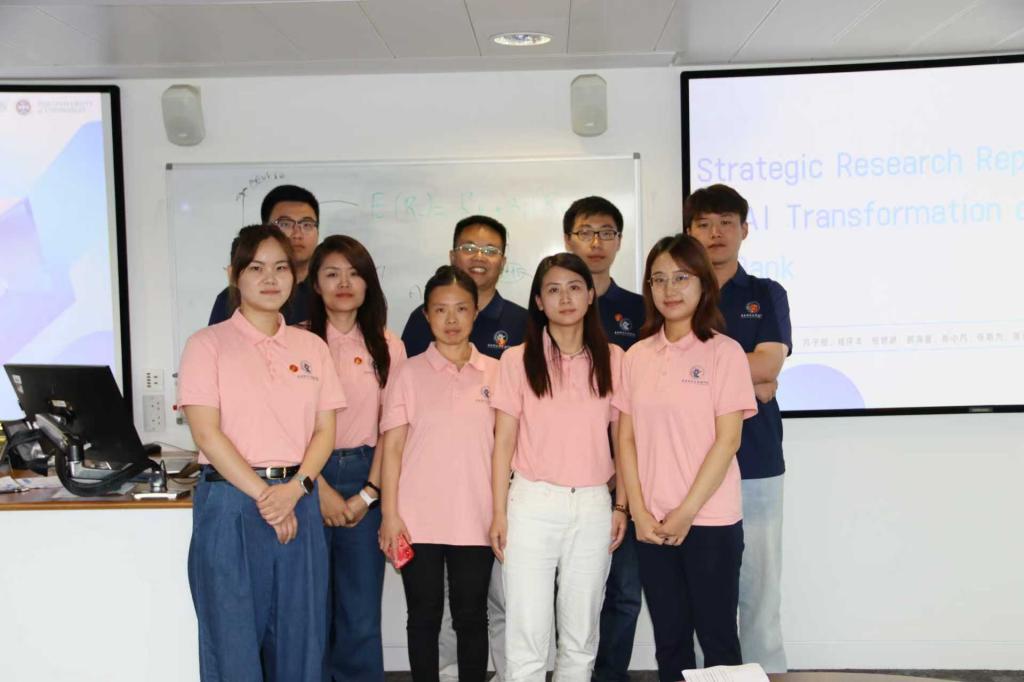
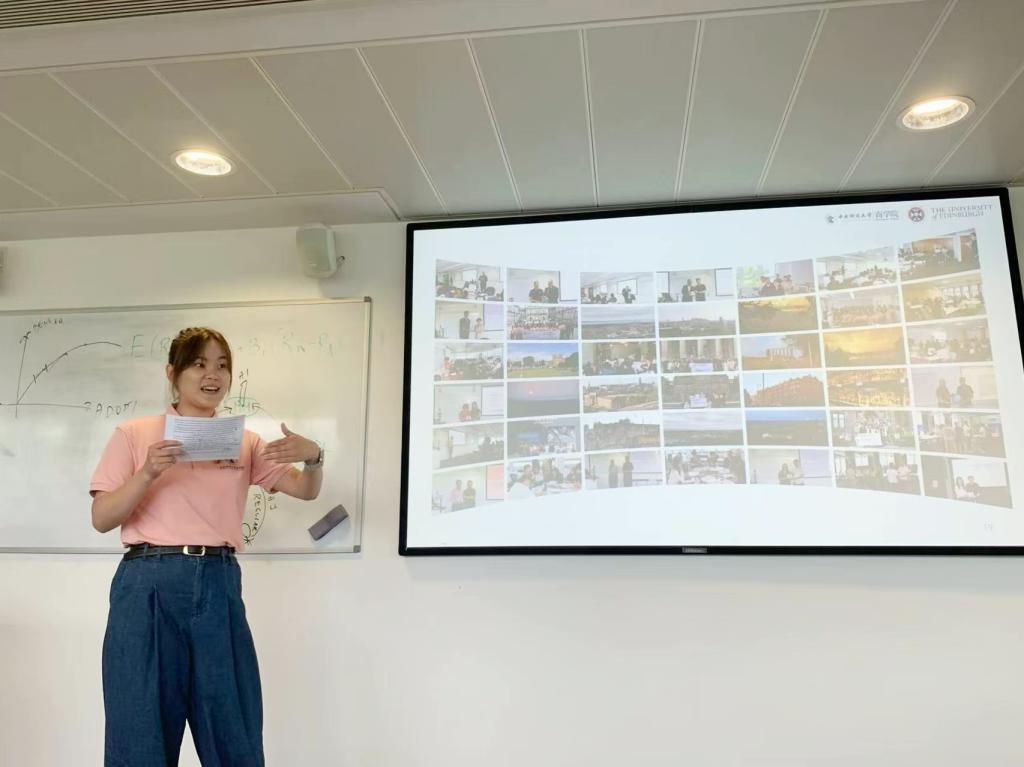
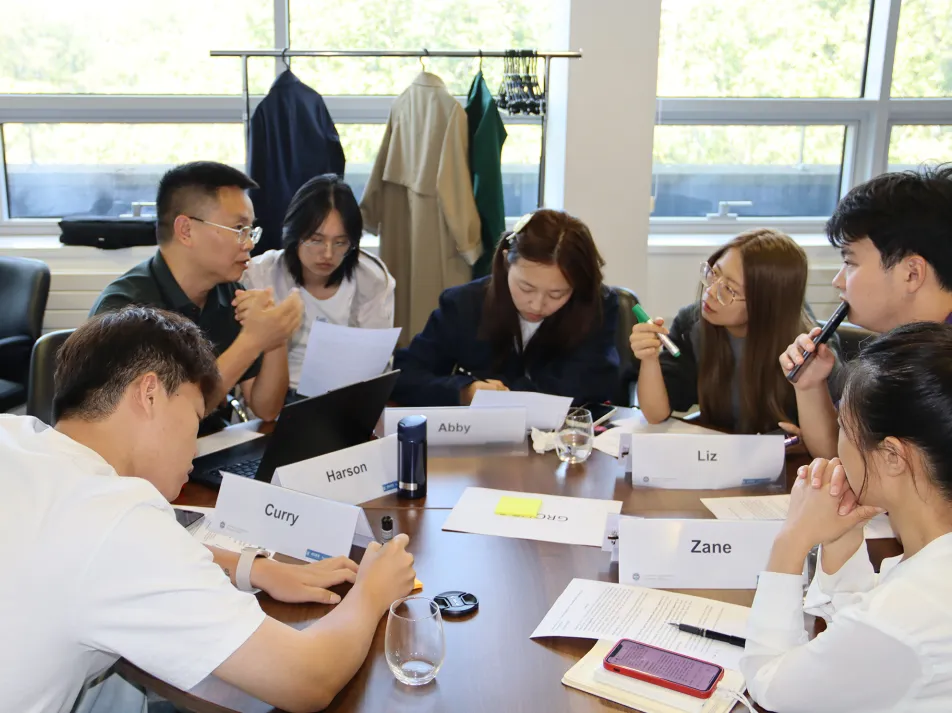
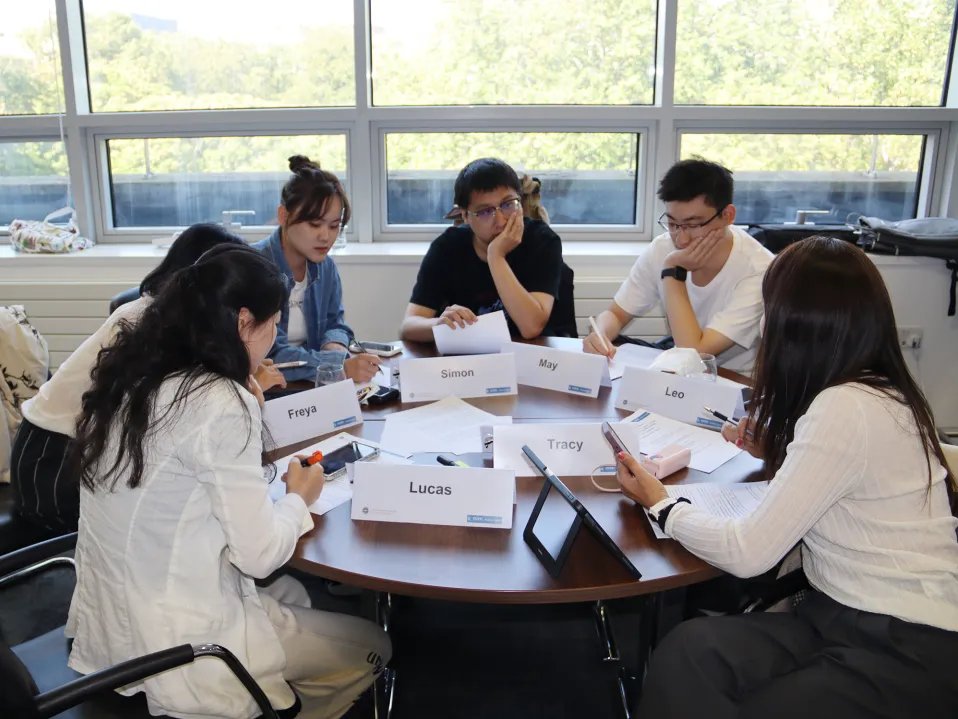
As the study visit drew to a close, the project team divided the 28 students into 3 groups to conduct special discussions and present learning achievements around fintech-related cases. After class, each group fully integrated the knowledge gained from academic courses, the insights from corporate visits, and the feelings from cultural experiences - especially the thoughts triggered in the China Exhibition Hall of the British Museum. They incorporated the concepts of "technological self-reliance" and "serving the country through industry" into their work, and systematically presented their learning achievements in the form of PPT reports through data research and case analysis. These presentations not only demonstrated solid professional literacy and innovative thinking, but also conveyed the sense of responsibility of young business talents.



Graduation Dinner: A Successful Conclusion and a New Start
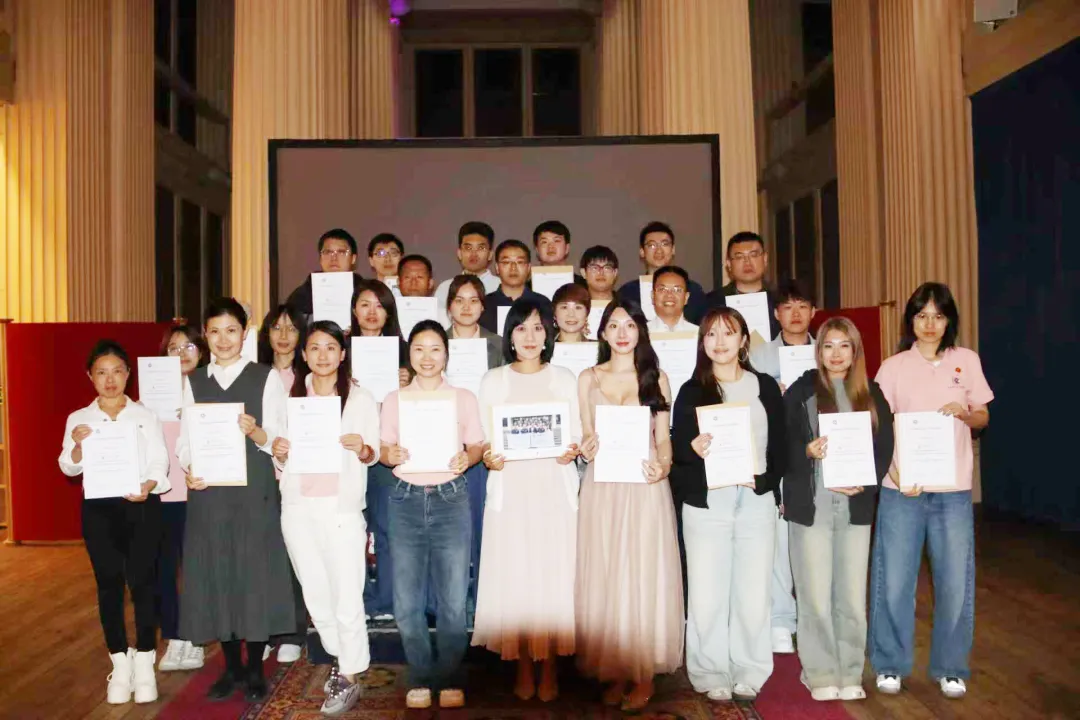
On the evening of August 22, the University of Edinburgh Business School held a graduation dinner for the CUFE GEMBA project team in the library of the Old College of the University of Edinburgh. Dr. Khaladdin Rzayev and Vice Dean Liu Xiaoyuan jointly presented graduation certificates to the students. The certificate in their hands is not only a testament to the achievements of this study visit, but also carries the mission of "empowering practice with knowledge and contributing to national strength through self-improvement", marking the successful conclusion of this dual-city study visit to Edinburgh and London.
Conclusion
This CUFE GEMBA project's study visit to the UK, through 12 professional courses, 8 corporate visits, and multiple cultural experience activities, has achieved an all-round improvement of the students in terms of "academic knowledge, practical ability, humanistic quality, and sense of mission and responsibility". The students have not only systematically mastered the cutting-edge theories and practical methods in the field of fintech in the AI era and deepened their understanding of international business rules, but also broadened their global perspective through cross-cultural exchanges and historical contemplation, strengthened their belief in "our generation should strive for self-improvement" and "serving the country through finance and economics", and further enhanced their innovative thinking and sense of social responsibility.
In the future, the CUFE GEMBA project will continue to focus on the training orientation of "internationalization, specialization, and practicality", actively connect with high-quality global educational resources and industrial resources, and create more international study visit platforms for MBA students that combine knowledge learning and spiritual baptism. Through immersive learning experiences, the project will enable students to base themselves in China, look at the world in the global economic society, understand international rules and cultures, master global and local business skills, and help them grow into business leaders with global competitiveness who "understand technology, are good at strategy, and have a sense of responsibility". This will contribute more to advancing the internationalization process of China's higher business education and serving the country's opening-up strategy and technological self-reliance strategy.